
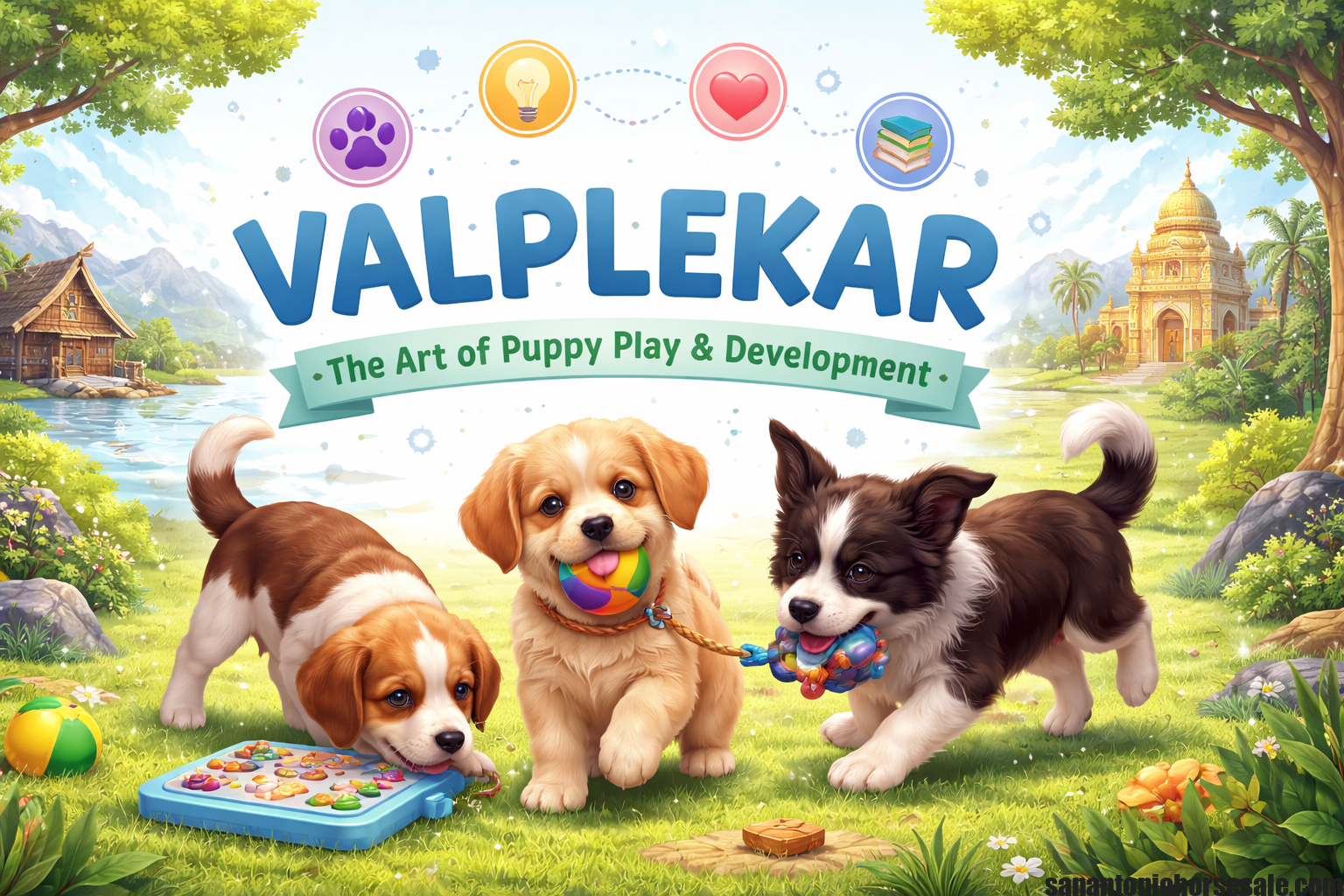
Valplekar is an emerging concept often associated with puppy play, early canine development, and behavioural learning through interactive experiences. While the term is not widely found in traditional veterinary textbooks, it has become popular in modern discussions about dog training, socialisation, and emotional development in puppies.
At its core, Valplekar represents the idea that play is the foundation of learning for puppies. Instead of relying only on strict training methods, puppies develop essential life skills through exploration, interaction, and structured play activities.Interestingly,can also appear as a surname in certain cultural contexts, reflecting heritage, identity, and regional background. This dual interpretation makes the term both biologically and culturally significant.
What Is Valplekar
Valplekar can be defined as a holistic approach to puppy development that focuses on play-based learning rather than force or strict training methods. It explains how young dogs naturally learn essential behaviours through enjoyable interaction, exploration, and positive engagement with their environment. In simple terms,refers to the process of teaching, socialising, and developing puppies through both structured and unstructured play activities that support healthy growth.
The core idea behind Valplekar is that puppies learn more effectively through fun and positive experiences than through pressure or punishment. It is based on the belief that behavioural patterns are formed during early life stages, making this period extremely important for development. Interaction with humans and other dogs is considered more powerful than isolation, while real-life experiences help build confidence more effectively than commands alone.
Linguistic Background of Valplekar
Although Valplekar is not a mainstream scientific term, its structure suggests interesting linguistic influences and cultural interpretations. From a possible Scandinavian perspective, the word appears similar to Nordic language patterns where Valp means puppy and Lekar refers to play or games, which together describe puppy play activities focused on learning through interaction and natural behaviour. On the other hand, in South Asian naming traditions, the suffix -kar is commonly used in surnames to indicate place of origin, family lineage, or community association.
This suggests that Valplekar may also exist as a family name representing cultural identity and ancestral background. Therefore, the term carries a unique dual identity, functioning both as a behavioural concept in animal development and as a cultural or familial surname within human society.
Importance of Valplekar in Puppy Development
Puppyhood is one of the most important stages in a dog’s life. During this period, the brain is highly adaptable, making learning extremely effective.Valplekar plays a crucial role in shaping a puppy’s future behaviour.
Builds Social Skills
Through Valplekar, puppies gradually learn essential social behaviours that help them interact positively with other dogs and people. During play, they understand how to communicate using body language, recognise signals, and interpret the intentions of others. They also learn important boundaries, such as when play is too rough or when to pause and adjust their behaviour. Over time, this develops respectful interaction habits, reducing the chances of aggression, fear, or social anxiety in later life.
Enhances Mental Development
Valplekar plays a key role in stimulating a puppy’s cognitive growth by encouraging activities that challenge the brain. Through playful experiences, puppies develop problem-solving abilities, natural curiosity, and improved memory retention. They also learn to make decisions based on situations they encounter during play. This mental stimulation is just as important as physical exercise, as it keeps the puppy’s mind active, engaged, and better prepared for training and learning.
Improves Emotional Stability
During early development, puppies experience a wide range of emotions as they explore the world. Valplekar helps them manage these feelings in a healthy way by reducing stress and anxiety through positive play experiences. It also builds confidence as they successfully interact with new environments and companions. Additionally, it teaches emotional control and helps puppies recover quickly from sudden surprises or unfamiliar situations, making them more stable and easier to train.
Supports Physical Health
Active participation in Valplekar contributes significantly to a puppy’s physical development. It helps strengthen muscles, improve bone density, and enhance overall coordination. Through regular movement-based play, puppies also develop better reflexes and agility, which are essential for their growth and daily activity. Consistent physical engagement ensures healthy development, supporting long-term mobility, strength, and overall fitness as the puppy matures.
Types of Valplekar
Valplekar is not limited to one type of activity. It includes several forms of play that contribute to overall development.
Social Play
Social play in Valplekar refers to interactions between puppies or between puppies and other dogs, where they learn essential communication skills in a natural environment. Through these experiences, puppies understand important signals such as body language, facial expressions, and vocal cues. They also develop bite inhibition, learning how to control the strength of their play to avoid causing harm.
Physical Play
Physical play includes movement-based activities such as fetch, running, tug-of-war, and chase games, all of which are important components of Valplekar. These activities help puppies build stamina, strength, and coordination while keeping them active and healthy. Physical engagement supports muscle development and improves overall fitness, which is essential during early growth stages.
Mental Stimulation Play
Mental stimulation play in Valplekar focuses on activities that challenge a puppy’s thinking abilities and cognitive development. This includes puzzle toys, treat-hiding games, scent tracking exercises, and object recognition activities. These games encourage puppies to use their senses and problem-solving skills, keeping their minds active and engaged. Mental stimulation is highly effective in preventing boredom, which can otherwise lead to destructive behaviours such as chewing or excessive barking.
Human Interaction Play
Human interaction play strengthens the emotional bond between a puppy and its owner, forming an essential part of Valplekar. This category includes training-based games, reward-based learning, recall exercises, and interactive bonding activities. Through these experiences, puppies develop trust, responsiveness, and obedience in a natural and enjoyable way. It also helps create a strong relationship built on positive reinforcement, making future training easier and more effective.
Benefits of Valplekar for Puppies
- Behavioural Improvement Structured Valplekar helps puppies develop discipline, patience, and self-control through consistent and guided play activities.
- Better Training Response Puppies who regularly engage in play-based learning respond more quickly and effectively to training commands and instructions.
- Reduced Destructive Behaviour Mental and physical stimulation through Valplekar helps prevent boredom-related issues such as chewing, barking, and unwanted digging.
- Stronger Human Bonding Interactive play strengthens the emotional connection between the dog and its owner, building trust and long-term companionship.
- Increased Confidence Exposure to new environments, experiences, and challenges during play helps puppies become more confident, brave, and adaptable.
Structured vs Unstructured Valplekar
| Aspect | Structured Valplekar | Unstructured Valplekar |
| Definition | Organised and guided play directed by the owner | Free and natural play without strict guidance |
| Main Focus | Training, discipline, and learning consistency | Exploration, curiosity, and freedom |
| Features | Training exercises, controlled games, behaviour reinforcement, goal-based activities | Independent exploration, spontaneous interaction, free movement, natural curiosity |
| Benefits | Builds discipline, obedience, and structured learning habits | Develops creativity, independence, and confidence |
| Owner Role | Active guidance and supervision required | Minimal interference, mostly observation |
| Outcome | Better control and behavioural consistency | Strong adaptability and emotional confidence |
| Overall Importance | Essential for teaching commands and structured behaviour | Essential for mental growth and natural development |
Common Mistakes in Valplekar
Many dog owners unintentionally reduce the effectiveness of Valplekar by making common mistakes during puppy play and training. One of the most frequent issues is overstimulation, where too much activity or excitement leads to hyperactivity, stress, and even aggressive behaviour in puppies.
Another major mistake is the lack of boundaries, as ignoring rules during play can encourage biting habits, jumping issues, and poor discipline over time. Excessive physical exercise is also harmful, especially for young puppies, as it can put unnecessary strain on developing joints and bones. Inconsistent training is another problem, where mixed signals from the owner confuse the puppy and slow down the learning process.
Cultural Significance of Valplekar
Beyond animal behaviour, Valplekar can function as a family surname in some regions.As a surname, it may represent:
- Ancestral heritage
- Geographic origin
- Family identity
- Cultural tradition
Surnames like this often carry historical importance, linking individuals to their roots and lineage.
When Should Valplekar Begin
Puppies can begin light Valplekar activities at around 6 to 8 weeks of age, which is an important early stage of development where learning happens quickly through simple experiences. At this age, all sessions should be kept short to avoid fatigue and overstimulation, while activities must remain gentle and stress-free to support healthy growth.
It is also essential to ensure that the environment is safe, calm, and properly controlled so that the puppy feels secure while exploring and interacting. As the puppy continues to grow and develop strength, confidence, and coordination, the complexity, duration, and variety of Valplekar activities can be gradually increased to support advanced learning and overall development.
Signs That Valplekar Is Working Effectively
You will notice positive changes when:
- Your puppy shows curiosity instead of fear
- Learning becomes faster and easier
- Social behaviour improves
- Recovery from surprises is quick
- Energy is balanced and controlled
These signs indicate healthy development.
Practical Valplekar Routine for Owners
A simple Valplekar routine can be divided into daily and weekly activities to ensure balanced development in puppies. On a daily basis, owners should include one to two short play sessions that keep the puppy active without causing overstimulation.
Along with this, one training-based game can be added to improve obedience and learning skills, as well as one exploration activity that allows the puppy to experience new sights, sounds, or environments in a safe way. Short rest periods are equally important, as they help the puppy recover and support healthy growth. On a weekly basis, it is beneficial to introduce new environment exposure, controlled social interactions with other dogs or people, reinforcement of previously learned behaviours, and repetition of favourite games to strengthen learning.
Conclusion
Valplekar is more than just simple puppy play it is a complete developmental system that plays a crucial role in shaping a dog’s behaviour, intelligence, emotional balance, and physical health. It highlights the idea that puppies learn most effectively when they are actively engaged in enjoyable experiences rather than being forced or pressured through strict methods.
Through a combination of structured and unstructured play, puppies gradually develop into confident, well-socialised, and emotionally stable adult dogs who can adapt easily to different environments and situations.