
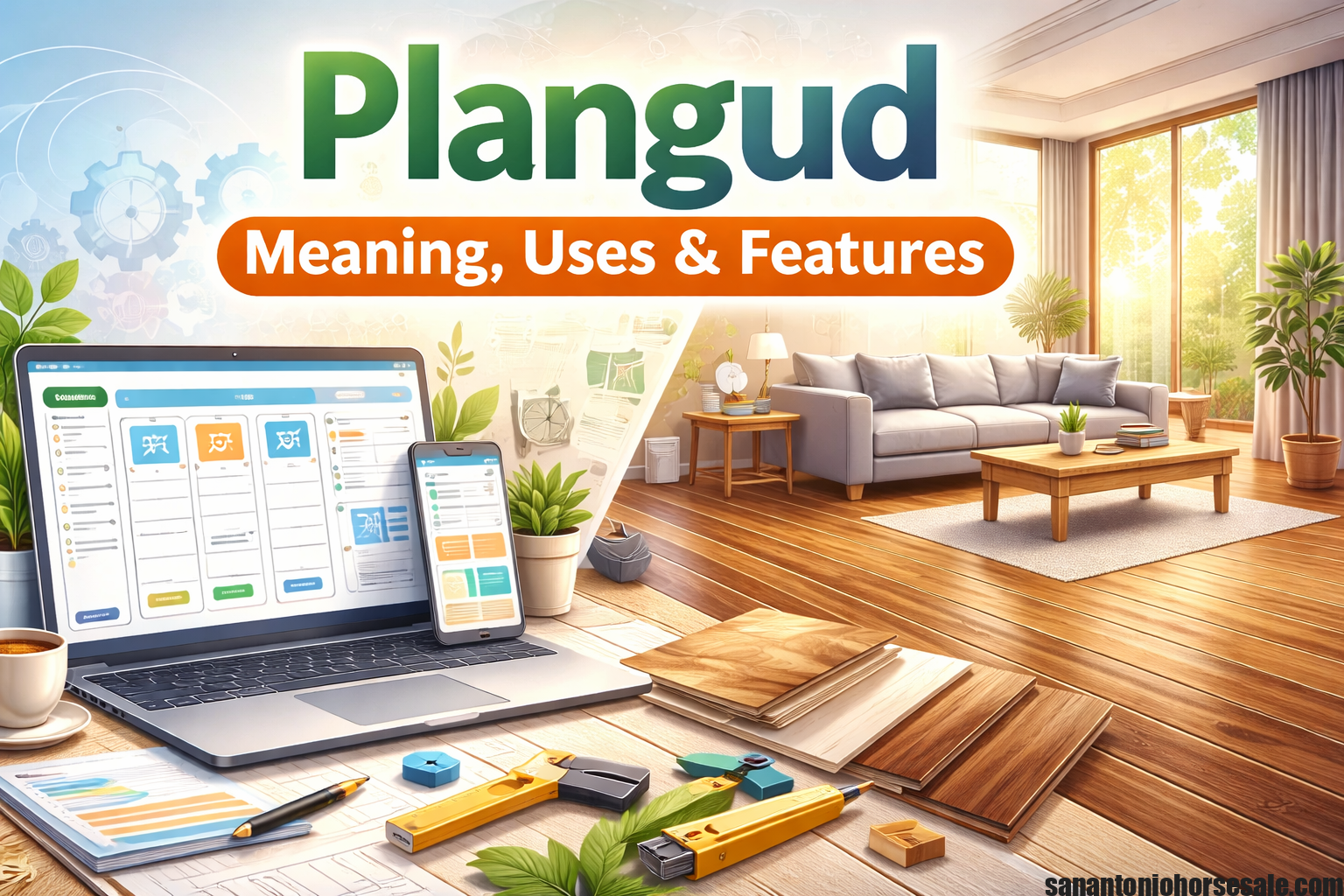
In 2026, the term Plangud is gaining significant attention across digital platforms, productivity communities, and even construction-related discussions. What makes it unique is not just the word itself, but the fact that it carries multiple meanings depending on context. Some users refer to it as a modern planning and productivity system, others describe it as a digital collaboration platform, while many associate it with flooring and engineered wooden materials.
This multi-dimensional identity has made Plangud an emerging keyword in SEO, business, and lifestyle discussions. However, it has also created confusion for users searching for a clear explanation.
What Is Plangud
Plangud is a modern multi purpose concept that refers to systems and materials designed to improve organisation, efficiency, and durability in both digital and physical environments.It can generally be understood in three major ways:
Digital Planning Platform
Plangud refers to a browser based productivity and project management tool designed to help users stay organised and efficient in their daily work. It allows individuals and teams to organise tasks in a structured way, assign responsibilities, and monitor progress in real time. With its workflow tracking features, users can easily manage multiple projects without confusion. It also improves collaboration by enabling team members to communicate, share updates, and stay aligned on goals within a single digital workspace.
Productivity Framework
Plangud also works as a structured productivity framework focused on improving how people plan and execute their daily activities. It encourages clear goal setting so users understand what they want to achieve in the short and long term. Task prioritisation helps individuals focus on what matters most instead of getting overwhelmed by less important work. It also supports habit building, allowing users to develop consistent routines that improve long-term performance. In addition, it enhances time management by helping people schedule tasks more effectively and avoid unnecessary delays.
Construction and Flooring Material
In the construction and interior design industry, Plangud is known as engineered wooden planks used for a variety of practical and aesthetic purposes. These materials are widely used in flooring to create durable and visually appealing surfaces in homes, offices, and commercial spaces. They are also used in interior design projects such as wall paneling and decorative finishes. Additionally, Plangud wood is commonly used in furniture production and architectural structures due to its strength, stability, and modern appearance.
Shared Foundation
Despite its different applications across digital systems, productivity methods, and construction materials, all meanings of Plangud are connected by a common principle: structured efficiency and long-term usability. Whether used for managing tasks, improving personal productivity, or enhancing physical spaces, Plangud consistently represents a system or material designed to deliver organised, reliable, and sustainable results over time.
Core Idea Behind Plangud
At its core, Plangud is based on three essential principles that work together to create a balanced and effective system. The first principle is structure, which focuses on bringing organisation to everything from tasks and projects to materials and workflows. By following a structured approach, Plangud helps eliminate confusion and ensures that every element has a clear place and purpose. The second principle is flexibility, which allows the system to adapt to changing conditions, new information, or updated requirements. Unlike traditional rigid systems, designed to evolve, making it easier for users to adjust their plans without disrupting the entire process.
The third principle is efficiency, which emphasises achieving the best possible results while using minimal time, energy, and resources. This focus on efficiency helps improve productivity and reduces unnecessary effort in both planning and execution.
Plangud as a Digital Productivity Platform
- Cloud-based project management tool focused on simplicity and collaboration
- Enables users to create tasks, assign them to team members, and track progress in real time
- Offers multiple work views including list view, calendar view, and Kanban board
- Allows users to visualise and manage workflows in different formats based on preference
- Supports collaboration through task comments, file sharing, and in-project communication
- Provides deadline tracking with reminders and progress indicators for better time management
- Includes a central dashboard to monitor active projects and upcoming deadlines
- Designed for freelancers managing clients and multiple projects
Plangud as a Productivity System
Beyond its role as a software tool, Plangud also functions as a personal productivity philosophy that helps individuals improve how they manage time, energy, and goals in a structured yet flexible way. At its core, it encourages goal alignment, ensuring that every task a person takes on is directly connected to a larger objective rather than being random or disconnected. It also emphasises task prioritisation, where the most important work is completed first instead of simply reacting to urgent demands.
Another key aspect is habit integration, which links daily routines with long-term success so that consistent small actions lead to meaningful progress over time. Alongside this, Plangud promotes structured flexibility, meaning that while planning provides clear direction, it can still be adjusted when new information, challenges, or opportunities arise.
The Do-Date Concept
One of the most powerful concepts in Plangud is the clear distinction between a Due Date and a Do Date. The due date represents the final deadline by which a task must be completed, while the do date refers to the planned time when the task will actually be executed. This simple yet effective separation encourages individuals to shift from reactive working patterns to proactive planning. Instead of waiting until the deadline approaches and creating unnecessary pressure, users plan their tasks in advance and allocate specific time slots for execution.
As a result, this approach significantly reduces stress, improves time control, and promotes a more organised workflow where work is completed consistently and efficiently rather than under last-minute urgency.
Plangud in Construction and Flooring Industry
In physical applications, Plangud refers to engineered wooden planks used in modern construction and interior design.These materials are designed for both strength and aesthetics.
Features of Plangud Flooring
Plangud flooring is designed with a strong focus on durability, making it suitable for environments that experience heavy foot traffic and long-term use without losing its structural quality. One of its key advantages is water resistance, which allows it to be used effectively in areas such as kitchens, offices, and various commercial spaces where moisture exposure is common. Along with performance, it also offers a modern appearance, delivering a clean and stylish wood-like finish that enhances the overall look of any interior. Another important benefit is its easy maintenance, as it requires minimal cleaning and upkeep compared to traditional flooring materials.
Types of Wood Used in Plangud
- Oak Strong and durable
- Pine Lightweight and cost-effective
- Walnut Premium dark aesthetic
- Maple Smooth and refined finish
- Ash Flexible and impact-resistant
- Mahogany Luxurious and elegant
Each type offers unique performance and design benefits.
Common Applications
- Home flooring
- Office interiors
- Hotel design
- Furniture manufacturing
- Wall panel installations
- Outdoor decking
Manufacturing Process of Plangud Wood
The production of Plangud wooden materials involves a carefully structured multi-stage process designed to ensure both strength and visual quality. It begins with wood selection, where high-quality raw timber is chosen to guarantee a strong foundation for further processing. Once selected, the logs undergo cutting and shaping, where they are cut into standard plank sizes suitable for different applications.
The next stage is the drying process, which uses either natural air drying or kiln drying to remove excess moisture and improve stability. After drying, the wood undergoes treatment, where it is strengthened and protected against pests, decay, and environmental damage. Finally, the process concludes with finishing, which includes polishing, sealing, or coating the surface to enhance appearance and durability.
Benefits of Plangud
- Improves organisation by structuring tasks, projects, and environments clearly
- Enhances time efficiency by reducing wasted effort through better planning systems
- Provides cost effectiveness with long-lasting materials and efficient workflows
- Offers versatility for use in business, personal life, and construction
- Ensures scalability for individuals, teams, and large organisations alike
Limitations of Plangud
Despite its many advantages, Plangud also comes with several challenges that users should be aware of. One of the main issues is concept confusion, as its multiple meanings across productivity, software, and construction can be difficult for new users to understand at first. Another challenge is the learning curve, since beginners may need some time to fully adapt to its system and features.
There is also the risk of overplanning, where excessive structure can slow down execution instead of improving efficiency. In addition, when it comes to physical applications, the material cost can be relatively high, especially for premium flooring options, which may require a higher initial investment.
Plangud vs Traditional Systems
| Feature | Traditional Systems | Plangud |
| Flexibility | Low | High |
| Structure | Fixed | Adaptive |
| Efficiency | Moderate | High |
| Usage Scope | Limited | Multi-purpose |
| Modern Suitability | Low | High |
Plangud clearly offers a more modern and adaptive approach.
Real Life Applications of Plangud
Plangud can be applied in multiple areas of everyday life, making it a versatile system for both personal and professional use. In daily life, it helps with task scheduling, allowing individuals to organise their routines more effectively, while also supporting habit tracking and personal goal management to build consistency and long-term progress.
In a business environment, plays a key role in project management by structuring tasks and timelines, improving team coordination, and optimising workflows for better productivity and efficiency. Beyond digital and professional use, it also extends into home design, where it is used in flooring installation, interior decoration, and furniture creation, contributing to both functionality and modern aesthetics.
Future of Plangud
Plangud is expected to evolve significantly in the future as technology and user needs continue to advance. One of the major developments will be AI integration, where smart systems will provide task suggestions, automate planning processes, and help users make faster, more accurate decisions. Another emerging direction is smart homes,concepts may integrate with intelligent flooring and modern design systems to create more connected and responsive living spaces. Sustainability will also play a key role, with a growing focus on eco-friendly materials and green productivity systems that reduce environmental impact while maintaining performance.
Conclusion
Plangud is a multi-dimensional modern concept that combines digital productivity systems, structured planning methods, and durable construction materials.
Its strength lies in its adaptability. Whether used for managing tasks, improving productivity, or designing physical spaces,focuses on one goal: better structure, better efficiency, and better results.As digital life and real-world design continue to evolve, Plangud is positioned to become an increasingly important concept in both technology and lifestyle industries.