
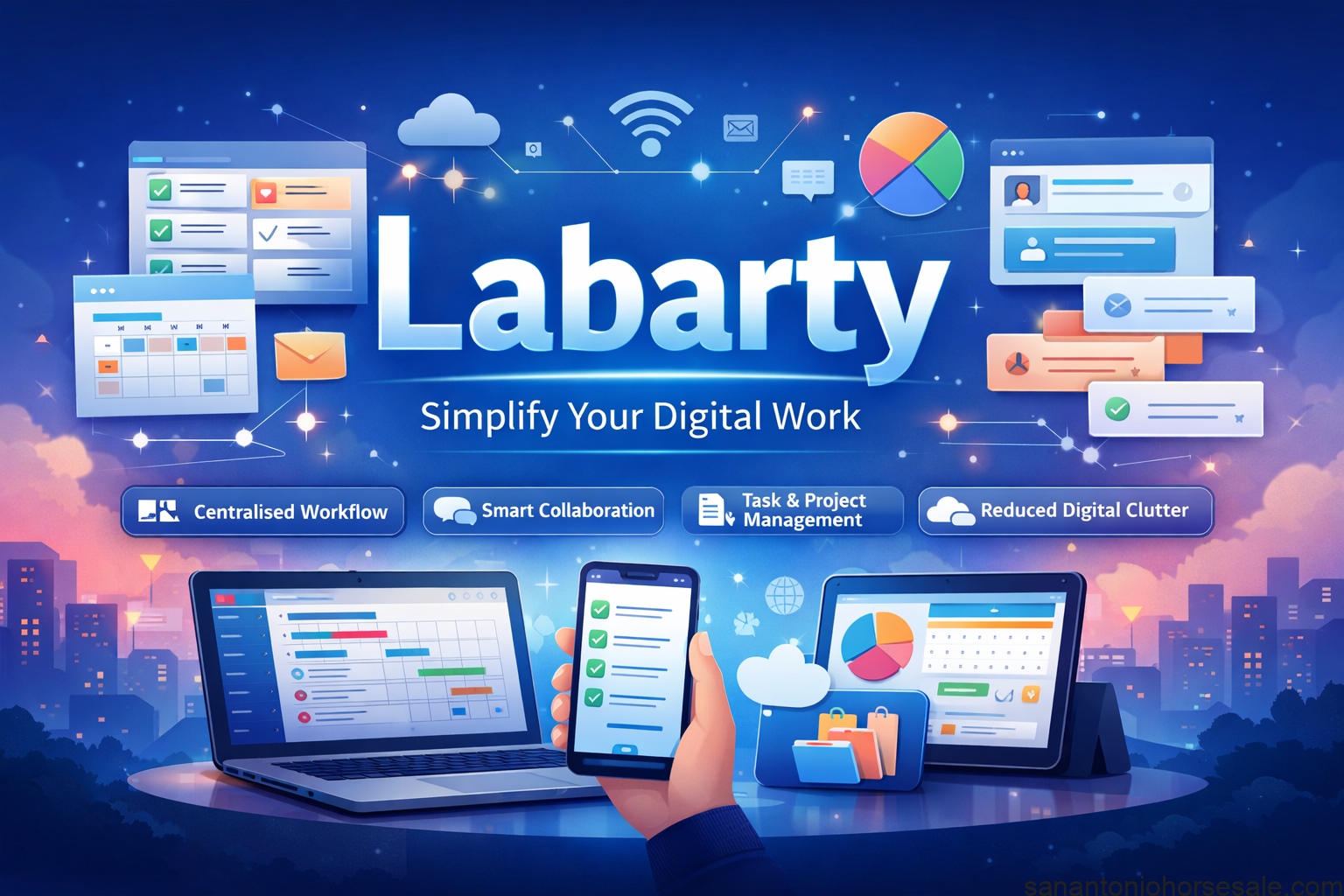
In the modern digital world, new terms and concepts emerge frequently as technology continues to evolve. One such term that has gained attention is Labarty. While it is not a formally standardised dictionary word, Labarty is increasingly used in online discussions to describe a modern digital productivity concept or workspace system designed to simplify organisation, collaboration, and workflow management.
As digital environments become more complex, individuals and businesses are constantly searching for tools and systems that reduce confusion and increase efficiency.associated with this exact idea creating a unified space where tasks, communication, and productivity come together in one structured system.
What is Labarty
Labarty can be understood as a conceptual digital framework that represents an integrated workspace environment designed to improve productivity and organisation. It is commonly associated with modern productivity systems that bring together multiple digital functions into a single, unified platform. In simple terms,refers to a system that combines a unified task management environment, a digital collaboration system, a structured productivity organisation model, and a workflow optimisation concept.
Instead of relying on multiple separate tools for communication, planning, and execution, Labarty integrates everything into one streamlined and organised system. This makes it particularly valuable in today’s remote working and digital-first environment, where efficiency, clarity, and centralised control are essential for managing tasks and teamwork effectively.
Meaning and Concept of Labarty
The concept revolves around one central idea: simplifying digital work by combining all essential tools into a single, unified system. In today’s fast-paced digital environment, most professionals struggle with managing multiple platforms such as email services, chat applications task management tools and file-sharing systems.
Labarty addresses this challenge by reducing complexity and bringing everything into one organised structure. The keyword Labarty symbolises structure in digital work, simplified productivity, centralised collaboration, and smart workflow management. Although the term is still evolving and not yet formally standardised, its usage is steadily increasing in discussions related to productivity systems, digital transformation, and modern workplace efficiency.
Key Features of Labarty
Labarty is typically described with a range of features that support productivity and organisation. These features may vary depending on how the concept is applied, but the core functions remain similar.
- Centralised Dashboard Provides a single place to view tasks, projects, and updates in an organised manner.
- Task Management System Allows users to create, assign, and track tasks for smooth workflow execution.
- Project Organisation Tools Breaks large projects into smaller, manageable steps for better control.
- Collaboration Features Enables real-time communication and teamwork among users.
- Workflow Automation Reduces repetitive work by automating tasks like reminders and notifications.
- File and Data Organisation Keeps all documents and resources stored and accessible in one system.
- User-Friendly Interface Designed to be simple and easy for all users, regardless of skill level.
Types of Labarty Systems
- Personal Labarty Used by individuals to manage daily tasks, schedules, and personal goals efficiently.
- Professional Labarty Designed for businesses and teams to handle projects, deadlines, and workplace collaboration.
- Educational Labarty Utilised in schools and universities for assignments, study materials, and group projects.
- Digital Labarty Platforms Advanced systems that use AI, automation, and cloud technology to improve productivity.
- Core Principle All types focus on improving organisation, efficiency, and structured workflow management.
How Labarty Works
Labarty can be understood in different forms depending on its usage environment and purpose. A Personal is used by individuals to manage daily tasks, organise schedules, and track personal goals in a structured way.
A Professional Labarty is designed for businesses and teams to handle projects, meet deadlines, and improve workplace collaboration efficiently. In the education sector, an Educational Labarty is used by schools and universities to manage assignments, learning materials, and group projects, helping students and teachers stay organised. On a more advanced level, Digital Platforms combine technologies such as artificial intelligence, automation, and cloud computing to enhance productivity and streamline workflows. Although each type serves a different purpose, they all follow the same core principle of improving organisation, efficiency, and structured workflow management.
Benefits of Labarty
Labarty offers several advantages for both individuals and organisations by improving how digital work is managed. One of its main benefits is increased productivity, as centralising tools allows users to save time and focus more on actual tasks instead of switching between different applications. It also provides better organisation by keeping all tasks, files, and communications in one structured place, making everything easier to manage.
Communication is improved as teams can collaborate more effectively without the need for multiple external apps. In addition, enhances time efficiency through automation, which reduces repetitive manual work such as reminders and updates. It also helps in cost savings because users can rely on a single system instead of paying for several separate tools. Finally, it supports enhanced focus by creating a clean and organised digital environment that minimises distractions and helps users stay productive.
Real World Use Cases of Labarty
Labarty can be applied in various real-world scenarios across different fields to improve organisation and productivity.Business management, companies use systems to manage projects, employees, and deadlines in a structured way. In freelancing, professionals rely on it to organise client work, track invoices, and manage multiple tasks efficiently.
In the education sector, students and teachers use Labarty style systems for assignments, group projects, and study planning to stay organised. It is also highly useful in remote work environments, where distributed teams depend on it to stay connected, communicate effectively, and maintain productivity. Additionally, content creators use to manage content calendars, generate ideas, and plan publishing schedules in a consistent and organised manner.
Labarty vs Traditional Productivity Tools
| Feature | Labarty Concept | Traditional Tools |
| System Type | Unified platform | Multiple separate apps |
| Task Management | Integrated | Fragmented |
| Collaboration | Real-time built-in | External tools required |
| Workflow | Structured | Unorganised |
| Efficiency | High | Moderate |
The biggest advantage of Labarty is its all-in-one structure, which eliminates the need for switching between different applications.
Challenges of Labarty
Although Labarty offers many benefits, it also comes with certain limitations that should be considered. One of the main challenges is the lack of a standard definition, as the term is still evolving and has not been officially formalised. Additionally, some users may experience a learning curve when adapting to new systems, especially if they are unfamiliar with digital productivity tools.
Labarty also depends heavily on technology, meaning a stable internet connection and proper digital infrastructure are required for smooth operation. Another potential issue is the risk of over-integration, where too many features within a single system can sometimes feel overwhelming for users. Despite these limitations, the overall advantages are often considered to outweigh its challenges.
Future of Labarty
The future of Labarty looks promising as digital transformation continues to grow globally.
Expected developments include
- Artificial Intelligence integration for smart task management
- Predictive workflow automation
- Advanced team analytics
- Seamless integration with external tools
- Voice-controlled productivity systems
As organisations move towards smarter digital ecosystems, Labarty-style platforms are expected to become more advanced and widely adopted.
Importance of Labarty in the Digital Age
In today’s fast-moving digital environment, efficiency and organisation have become more important than ever before. Labarty represents a significant shift towards simplified digital workflows that reduce unnecessary complexity and improve productivity. It promotes centralised work systems where all tasks, communication, and resources are managed in one place, making work more structured and easier to control. Additionally, supports smarter collaboration methods that help teams work together more effectively, especially in remote and hybrid environments.
By reducing digital clutter and eliminating the need for multiple disconnected tools, it creates a cleaner and more focused workspace. This makes highly relevant for modern professionals who want to enhance productivity while keeping their work processes simple and efficient.
Advantages and Limitations
Advantages
- Easy to use
- Highly organised
- Improves productivity
- Supports teamwork
- Saves time and money
Limitations
- Still an emerging concept
- Not universally standardised
- Requires adaptation for new users
Conclusion
Labarty is best understood as a modern digital productivity concept focused on integration, simplicity, and efficiency. It reflects the growing need for unified systems that reduce complexity in digital work environments.
Whether used for business, education, freelancing, or personal organisation Labarty represents a powerful idea bringing everything into one structured system to improve focus and productivity.