
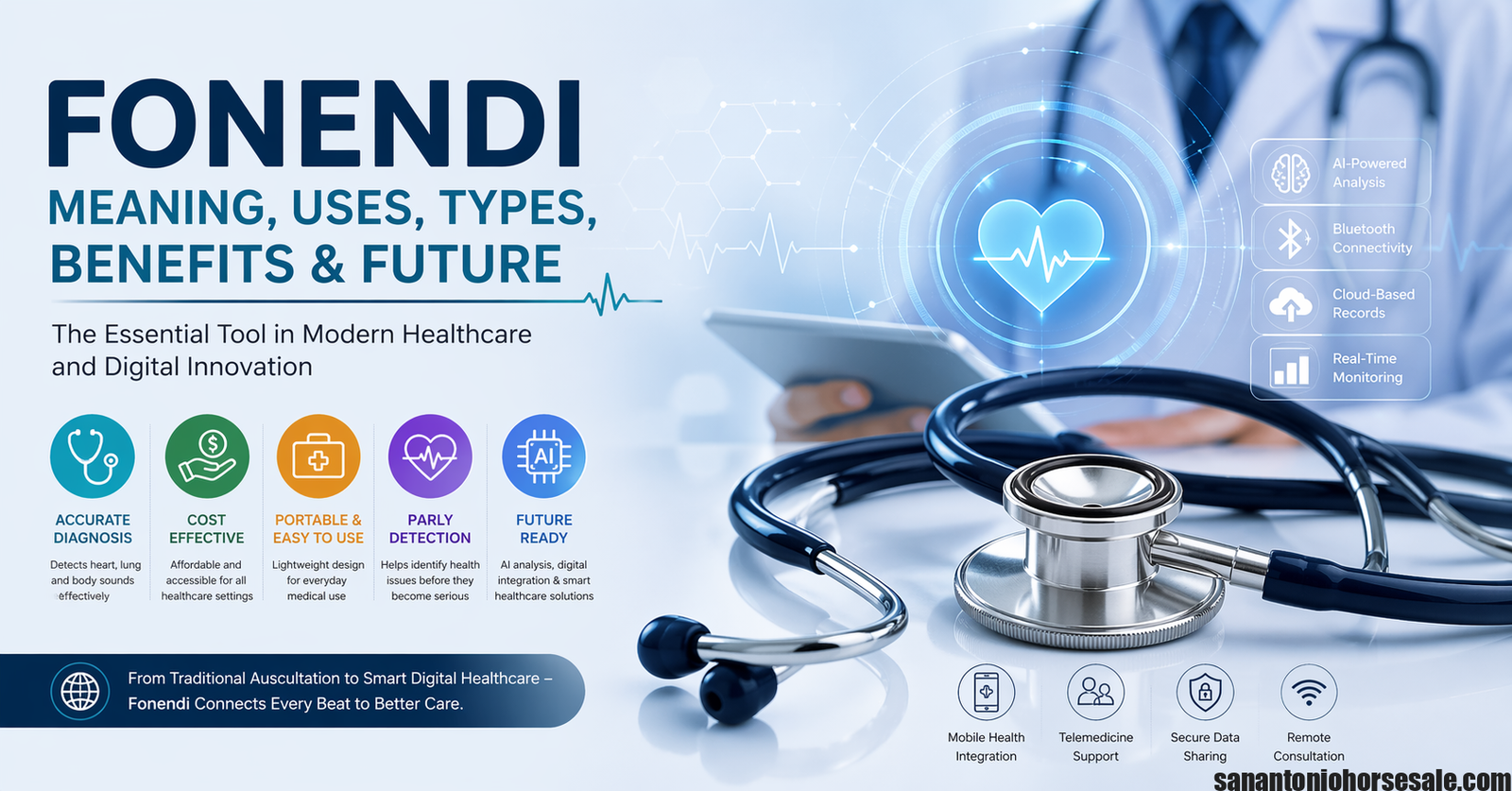
In today’s digital and information-driven world, certain terms begin to appear frequently across websites, articles, and discussions, even when their meaning is not fully clear. One such term is Fonendi. Over the past few years,gained attention in healthcare discussions, technology content, and even branding conversations. However, its definition is not always consistent, which creates confusion among readers.
Fonendi is commonly associated with medical instruments especially devices used for listening to internal body sounds. At the same time, some online sources expand its meaning to include modern digital systems, business concepts, and technological platforms. This variation makes Fonendi a flexible but often misunderstood term.
What Is Fonendi
Fonendi is most commonly used as a term for a medical listening instrument, similar to a stethoscope or fonendoscope, which healthcare professionals use to examine internal body sounds such as heartbeats, lung activity, blood flow, and intestinal movements. However, in modern digital content and broader discussions,also interpreted in several extended ways, including a healthcare technology concept, a smart diagnostic tool, a business or innovation mindset, and even a digital brand or software platform.
Because of these varying interpretations,does not have one fixed or universally accepted definition; instead, its meaning depends on the context in which it is used. In simple terms, Fonendi can be understood as a term that represents both traditional medical listening tools and modern healthcare-related innovations focused on sound-based diagnosis, advanced technology, and improved clinical understanding.
Origin and Historical Background of Fonendi
To understand Fonendi properly, it is important to look at the history of its medical roots. The concept is closely connected to the stethoscope, one of the most important inventions in medical science.
Early Development
The history of Fonendi is closely connected to the invention of the stethoscope. In 1816, French physician René Laennec introduced the world’s first stethoscope. His original design was a simple wooden tube that allowed doctors to listen to heart and lung sounds without placing their ear directly on a patient’s chest. This groundbreaking invention significantly improved medical examinations and laid the foundation for modern auscultation techniques used in healthcare today.
Evolution Over Time
As medical science advanced, the stethoscope underwent significant improvements in design and functionality. Early wooden monaural models gradually evolved into binaural stethoscopes with dual earpieces, providing clearer and more accurate sound transmission. Later developments introduced flexible rubber tubing, lightweight metal chest pieces, and improved acoustic performance In many regions, the term Fonendi is commonly used as a variation of “fonendoscope,” referring to these more sophisticated acoustic devices.
Modern Interpretation
Today, Fonendi represents far more than a traditional medical instrument. While it still refers to advanced stethoscope-like devices, the term has expanded to include modern healthcare innovations. Digital devices may feature artificial intelligence, Bluetooth connectivity, real-time sound visualisation, and cloud-based data storage.As healthcare continues to embrace technology,has become a symbol of the fusion between classic medical practice and next-generation digital healthcare solutions.
How Fonendi Works in Medical Practice
Fonendi operates on a simple yet highly effective principle: sound transmission through vibration. When the chest piece is placed on a patient’s body, it captures internal vibrations produced by organs such as the heart, lungs, and digestive system. These sound waves then travel through the tubing and are delivered directly to the healthcare professional through the earpieces.
A typical features two main sound detection areas: the diaphragm, which is the flat side used to detect high-frequency sounds like normal heartbeats and lung airflow, and the bell, the smaller cup-shaped side designed to capture low-frequency sounds such as heart murmurs and certain vascular noises. Because of its speed, reliability, and non-invasive nature, Fonendi is often one of the very first instruments used during a routine physical examination.
Uses of Fonendi in Healthcare
- General Medical Examination Fonendi is commonly used during routine health check-ups to evaluate a patient’s overall condition and identify any unusual internal sounds.
- Cardiology Cardiologists rely on Fonendi to detect heart murmurs, irregular heartbeats, valve abnormalities, and other cardiovascular conditions.
- Pulmonology It helps healthcare professionals assess lung function and diagnose respiratory conditions such as asthma, pneumonia, bronchitis, and other breathing disorders.
- Emergency Care In urgent medical situations, provides rapid diagnostic information, allowing doctors and paramedics to make immediate treatment decisions.
- Medical Training Medical students and trainees use Fonendi extensively to develop their auscultation skills and learn how to recognise normal and abnormal body sounds.
Types of Fonendi Devices
Fonendi devices are available in several types, each designed to meet specific medical needs and diagnostic requirements. The Acoustic Fonendi is the traditional version, relying entirely on sound transmission without any electronic components. It is highly reliable, easy to use, and remains the most widely used option among healthcare professionals.
The Digital represents a modern advancement, featuring electronic sound amplification, background noise reduction, and often the ability to record and store audio for later analysis. For specialists, the Cardiology offers exceptional sensitivity, allowing cardiologists to detect subtle low-frequency heart sounds, murmurs, and other cardiovascular abnormalities with greater precision. care across various clinical settings.
Modern Technological Interpretation of Fonendi
In recent years, Fonendi has increasingly been associated with smart healthcare technology, reflecting the rapid digital transformation of modern medicine. Advanced Fonendi systems may include features such as AI-powered sound analysis, Bluetooth connectivity, real-time data sharing, cloud-based medical record integration, and digital sound visualisation.
These innovations enhance diagnostic accuracy while making patient data easier to access and manage.also plays an important role in telemedicine, enabling healthcare professionals to listen to patient sounds remotely, securely store and share diagnostic recordings, and conduct virtual consultations from virtually anywhere.By combining traditional auscultation with digital innovation, is helping to make healthcare more efficient, connected, and accessible worldwide.
Benefits of Fonendi
- Non-Invasive Diagnosis Fonendi allows healthcare professionals to assess internal body sounds without the need for surgery, needles, or invasive medical procedures.
- Fast Results Doctors can immediately hear, analyse, and interpret heart, lung, and other body sounds during the examination.
- Cost-Effective Compared to expensive diagnostic equipment such as MRI or CT scanners,is highly affordable and accessible.
- Portable and Convenient Its lightweight, compact design makes it easy to carry and ideal for hospitals, clinics, ambulances, and home visits.
- Early Disease Detection Fonendi helps identify potential health problems at an early stage, enabling faster treatment and better patient outcomes.
Limitations of Fonendi
Despite its many benefits, Fonendi also has certain limitations that healthcare professionals must consider. Accurate interpretation of body sounds requires proper medical training and clinical experience, meaning inexperienced users may miss important abnormalities. Additionally, while is excellent for initial assessments, it cannot replace advanced diagnostic imaging technologies such as MRI, CT scans, or ultrasound when detailed internal visualisation is necessary.
Environmental noise can also interfere with sound clarity, particularly in busy hospitals or emergency settings. Finally, the effectiveness of Fonendi depends heavily on the skill, hearing ability, and expertise of the user, making human judgement a critical factor in achieving accurate diagnoses.
Why Fonendi Is Gaining Attention Online
Fonendi has emerged as a trending keyword largely because of the rapid growth of digital healthcare, the expanding role of artificial intelligence in medicine, and the increasing volume of online content surrounding innovative medical technologies. As healthcare becomes more technology-driven, terms like naturally attract greater attention from professionals, businesses, and consumers alike.
Additionally, its modern and distinctive sound has made it appealing for branding, startups, and technology platforms. Many websites now use as a multi-industry concept that spans healthcare, innovation, software, and business, which further fuels public curiosity and search interest across the internet.
Fonendi as a Brand or Concept Name
Beyond its medical associations, Fonendi has also gained popularity as a brand name and conceptual identity. Its unique pronunciation, modern appeal, and memorable structure make it an attractive choice for startups, healthcare companies, technology firms, and digital platforms.
The name conveys innovation, professionalism, and forward-thinking qualities, allowing it to fit naturally across multiple industries. Its versatility is one of its strongest branding advantages, as it can represent everything from medical devices to software solutions. However, because carries several interpretations, businesses must establish a clear brand identity and messaging strategy to avoid confusion and ensure their audience immediately understands its purpose and value.
Future of Fonendi
The future of Fonendi is closely connected to ongoing advancements in medical innovation and digital healthcare transformation. Expected developments include AI-assisted diagnostic tools that help clinicians identify health conditions more accurately and efficiently, as well as smart digital stethoscopes with enhanced sound clarity and intelligent filtering. Integration with mobile health applications will also allow doctors to access and analyse patient data more conveniently, while advanced telemedicine systems will support remote consultations and faster decision-making.
In addition, real-time patient monitoring systems are expected to become more common, enabling continuous tracking of vital signs and early detection of potential health issues.
Conclusion
Fonendi is a versatile and evolving term that is primarily associated with medical listening instruments but also extends into modern healthcare technology and branding concepts. While its core function remains rooted in diagnosing internal body sounds, its interpretation has expanded in the digital age.
As technology continues to grow, Fonendi will likely remain an important part of discussions around diagnosis, medical tools, and smart healthcare systems.
Disclaimer
The information provided in this article is for general informational and educational purposes only. It is not intended to be a promotional content, medical advice, diagnosis, or treatment recommendation. Fonendi and related medical tools should only be used under the guidance of qualified healthcare professionals.
The author and publisher are not responsible for any loss, damage, or consequences arising from the use or misuse of the information provided in this content. Readers are advised to seek professional medical or technical advice before making any decisions based on the information discussed in this article.