
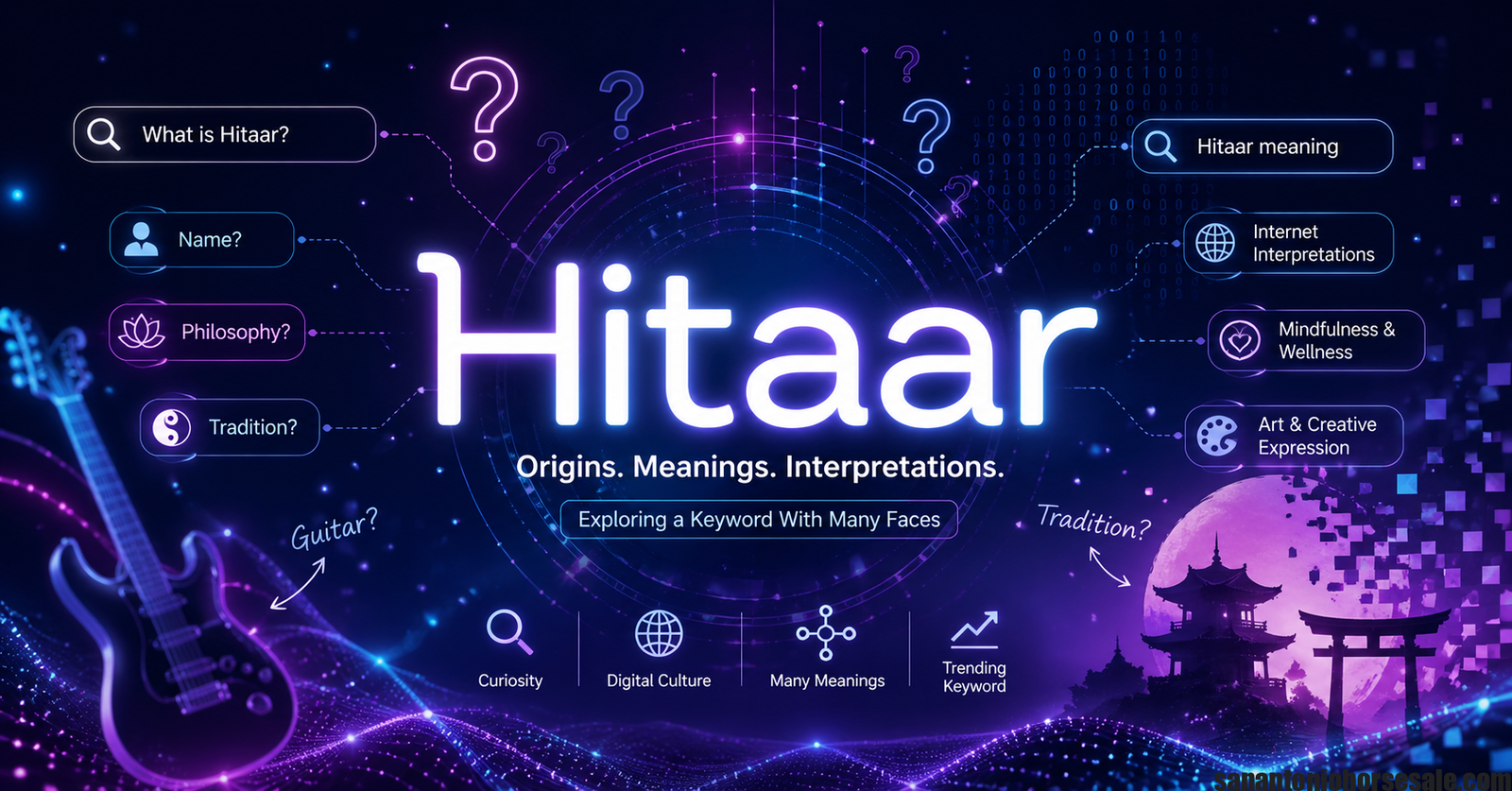
The word Hitaar has recently gained attention across blogs, social media platforms, and search engines. Many websites describe it as a cultural practice, a spiritual concept, or even an ancient Japanese tradition. Others link it to wellness, art, or symbolic philosophy.
However, when we carefully analyse linguistic sources cultural records and real-world usage, the meaning becomes far less clear and far more interesting.In reality, Hitaar is not a well-documented historical or cultural term. Instead, it is an example of a modern internet keyword that has developed multiple interpretations over time, often shaped by SEO content creation, naming databases, and digital curiosity.
What Is Hitaar
The term Hitaar does not have a single verified definition in major dictionaries, linguistic records, or academic sources. Instead, it appears in different contexts with different meanings.Based on real-world usage,generally associated with three interpretations:
Rare Name or Word Usage
Some name databases list Hitaar as a rare personal name, and in these sources it is often associated with meanings such as cap, cover, or topi (hat). This interpretation mainly appears in certain Urdu or Islamic naming websites where the word is included as a name option rather than a widely used vocabulary term. However, the available documentation for this meaning is limited, inconsistent, and not strongly supported across reliable linguistic references. As a result, in this context remains a rare and loosely defined name with unclear historical depth.
Internet Generated Concept
In contrast, many modern blogs present Hitaar as a broader conceptual idea rather than just a name. These interpretations describe it as a philosophy of balance, a wellness practice, a symbolic art form, or even a harmony-based movement. According to these sources, it represents mindfulness, emotional stability, and creative expression. However, it is important to note that these meanings are not backed by verified historical, cultural, or academic evidence. Instead, they are largely developed in online content environments, often shaped by content marketing strategies and creative storytelling rather than established tradition.
Keyword Variation or Misinterpretation
In many cases, the appearance of the word Hitaar is simply the result of spelling variations, phonetic interpretations, or search engine experimentation. Users may type it differently based on pronunciation, especially in multilingual regions where transliteration varies. Because of this, it is sometimes confused with unrelated terms or repurposed as a creative keyword in digital content. This makes less of a fixed linguistic term and more of a flexible search keyword that changes meaning depending on context and usage.
Origins of Hitaar What Do We Actually Know
Unlike well-established cultural or linguistic concepts, Hitaar does not have any confirmed historical origin. There is no verified ancient script that references it, no documented cultural tradition associated with it, and no academic research that defines it as a recognised practice or concept. Because of this lack of evidence,cannot be confidently traced back to any specific civilisation, era, or traditional system. Its background remains unclear and largely unsupported by credible historical records.
Digital Emergence
The most noticeable appearance of Hitaar comes from the digital space. It began gaining attention through blog posts, SEO-driven articles, name-meaning websites, and discussions on social media platforms. These online sources played a major role in spreading the term and giving it visibility. This pattern strongly suggests that is not an ancient or traditional term, but rather a digitally amplified keyword that has grown in popularity through internet usage and content creation rather than historical transmission.
Linguistic Association
Some online sources attempt to connect Hitaar with Urdu or Arabic naming structures, where similar-sounding words may relate to ideas such as protection, covering, or identity. These interpretations are often based on phonetic resemblance rather than verified linguistic roots. However, these connections are not strongly supported by authoritative dictionaries or standardized language references. As a result, the linguistic meaning remains uncertain and loosely interpreted.
Modern Creative Interpretation
In more recent years, writers and bloggers have expanded the meaning of Hitaar into a symbolic and conceptual idea. It is often described as representing balance, creativity, emotional harmony, and personal growth. These interpretations are creative in nature and reflect modern storytelling rather than historical definitions. They show how internet culture can reshape a word into a broader philosophical concept, even when no traditional foundation exists.
Is Hitaar a Japanese Tradition
One of the most common claims found online is that represents an ancient Japanese art form, a spiritual movement, or a meditative performance practice. However, these claims are not supported by any reliable Japanese cultural, historical, or academic sources. There is no mention of Hitaar in traditional Japanese performing arts such as Noh theatre, Kabuki, or the tea ceremony traditions, nor does it appear in recognised Japanese linguistic dictionaries.
Additionally, there is no cultural or historical documentation that links to Japan in any established form. Based on this lack of evidence, it is reasonable to conclude that the idea of Hitaar as a Japanese tradition is most likely a modern invention that has emerged through online content creation rather than authentic historical heritage.
Why Is Hitaar So Popular Online
The rise of Hitaar as a keyword is a clear example of how internet culture shapes meaning and spreads information. One of the main reasons behind its popularity is the curiosity effect, where people naturally search for unusual or unfamiliar words to understand them. When users encounter multiple and often conflicting explanations online, their curiosity increases even further, encouraging more searches and discussion.
Another factor is AI and content repetition, where similar explanations of Hitaar are reused across different blogs, creating an illusion of credibility and established meaning even when no verified source exists. In addition, the word has strong branding potential because it sounds unique, modern, and easy to remember. This makes it appealing for businesses, bloggers, and creators who are looking for distinctive names for projects, products, or digital identities.
Symbolic Interpretations of Hitaar
Even though Hitaar does not have a fixed or historically verified meaning, modern writers often assign symbolic interpretations to it in contemporary content. In some articles, it is described as representing balance and harmony in life, highlighting contrasts such as work versus personal life, emotion versus logic, and tradition versus modernity.
Other interpretations focus on creativity and expression, where Hitaar is linked with artistic freedom, music, movement, and emotional storytelling. In wellness-focused content, it is also associated with mindfulness and awareness, often described through ideas like inner peace, meditation-like consciousness, and slow, intentional living. However, it is important to understand that these meanings are interpretive and creative in nature rather than verified cultural or historical facts.
Hitaar vs Guitar Common Confusion
| Aspect | Explanation |
| Main Reason for Confusion | Hitaar is often confused with the word “guitar” due to similar pronunciation in South Asian languages. |
| Phonetic Variation | Many users type “hitaar” based on how “guitar” sounds when spoken in regional accents. |
| Search Behaviour | People searching for music instruments unintentionally use different spellings, leading to mixed results. |
| Types of Results Appearing | Search engines show a combination of music-related content, cultural blogs, and name-meaning pages. |
| Impact on Online Presence | This confusion increases visibility of the keyword “Hitaar” and contributes significantly to its spread online. |
Hitaar as a Name
Some websites list Hitaar as a rare personal name, and it is sometimes used in naming contexts for a few possible reasons. It is short, modern-sounding, and easy to pronounce across different languages, which makes it appealing for parents or creators looking for something distinctive.
In addition, it carries abstract symbolic interpretations in some online sources, which adds to its perceived depth and uniqueness. Because of these qualities, it is also considered suitable for branding or creative identity purposes. However, its linguistic accuracy varies significantly depending on the source, and it is not widely recognised in official or established naming dictionaries, making its usage informal and inconsistently verified.
Hitaar in Digital Culture
Hitaar is a strong example of how modern internet culture can create and reshape meaning over time. In today’s digital environment, words often evolve in several ways that are driven more by online usage than by traditional linguistic rules.
First, a word can move from real language into digital reinterpretation, where it gains new symbolic or conceptual meanings through blogs and online discussions. Second, simple typing errors or phonetic spellings can transform into search trends, as users repeatedly enter variations that then gain visibility on search engines. Third, a keyword can gradually develop into a broader concept, where content creators and bloggers expand it into philosophical or lifestyle ideas, even without historical backing. fits into all three of these patterns, showing how internet culture can give rise to layered and evolving interpretations of a single term.
Critical Analysis Is Hitaar a Real Concept
To be clear and factual, Hitaar does exist as a searched keyword and appears across various name databases, blogs, and online articles. It is also used creatively in digital content where writers assign different meanings or interpretations to it. However, several claims about Hitaar remain unproven.
There is no verified evidence of an ancient cultural origin, no reliable link to Japanese tradition, and no academic or historical support for it being a spiritual or wellness system. Similarly, it is not recognised as a documented historical art form. Overall, its usage is mainly digital and interpretive rather than rooted in established cultural or historical records.
Why Understanding Hitaar Matters
Even though Hitaar is not a historically established concept, it still holds importance in a digital context because it demonstrates how modern information ecosystems work. First, it shows how information spreads online, where a single keyword can quickly gain multiple meanings as different websites and users interpret it in various ways.
Second, it highlights how SEO can shape perception, since repeated content across blogs and articles can make an idea appear more credible or widely accepted than it actually is. Finally, it reflects how language continues to evolve in the digital age, with new meanings often being created, adapted, and shared within online spaces rather than through traditional linguistic or cultural development.
Conclusion
The keyword Hitaar is best understood as a modern internet-generated term that carries multiple interpretations but has no confirmed historical or cultural origin. Most available evidence suggests that it is used either as a rare name or a keyword, sometimes associated with meanings like cap or cover in certain naming databases.
In many cases, it is also confused with the word “guitar” due to phonetic similarity, which adds to its varied online usage.